Water shapes nearly every memorable view at Fall Creek Falls State Park. Across the Cumberland Plateau, creeks slip over sandstone ledges and descend into the deep, forested Cane Creek Gorge. The result is not one waterfall but a remarkable collection of plunges, cascades and seasonal ribbons of water—some visible from easy overlooks and others reached only by rugged trails.
This guide brings the park’s principal waterfalls together in one place. Use it to decide what to see, how much walking to expect and which detailed waterfall guide to read next. Water levels, trail conditions and access can change, so check current Tennessee State Parks notices before leaving home.
Start Here: The Waterfalls at a Glance
| Waterfall | Listed height | Best first experience |
|---|---|---|
| Fall Creek Falls | 256 feet | The park’s signature overlook and, for prepared hikers, the steep route into the gorge |
| Coon Creek Falls | About 250 feet | A slender companion cascade beside the main falls, strongest after rain |
| Rockhouse Falls | 125 feet | A dramatic plunge in the Cane Creek Gorge near Cane Creek Falls |
| Piney Creek Falls | 95 feet | A scenic overlook in a quieter section of the park |
| Cane Creek Falls | 85 feet | A broad, powerful waterfall near the nature center area |
| Cane Creek Cascades | 45 feet | An accessible introduction to the park’s water features near the nature center |
Heights are commonly published measurements and should be treated as approximate. Flow varies greatly with rainfall.
Fall Creek Falls
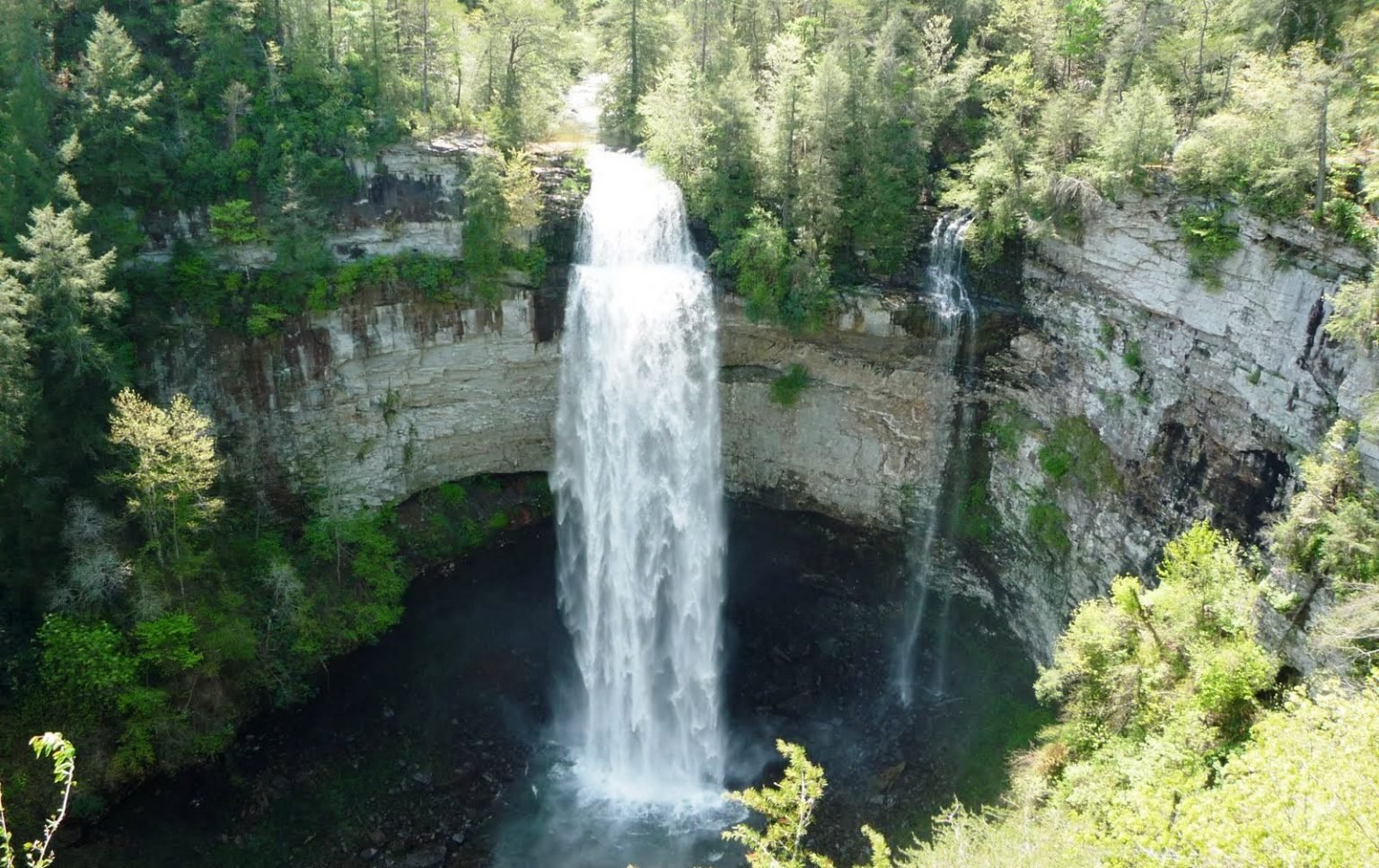
The namesake Fall Creek Falls drops 256 feet into the gorge and is the park’s defining view. The overlook gives most visitors the classic perspective without requiring a long hike. When water is running well, the falls seem to hang in the open air before disappearing into the forest below. A trail descends toward the base, but it is steep, rocky and much more demanding than the overlook visit. Read our complete Fall Creek Falls guide before choosing that route.

Coon Creek Falls
Coon Creek Falls descends beside Fall Creek Falls and shares the same great amphitheater of rock and forest. It is a more delicate waterfall and can fade considerably in dry weather. After sustained rain, however, the pairing is one of the most distinctive scenes in the park. See our Coon Creek Falls guide for viewing notes.
Cane Creek Falls and Rockhouse Falls
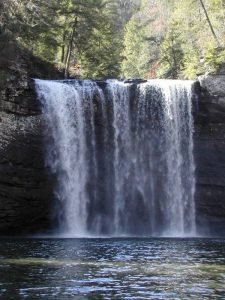
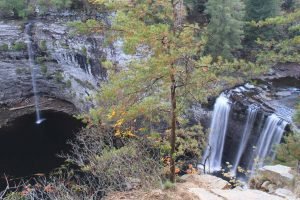
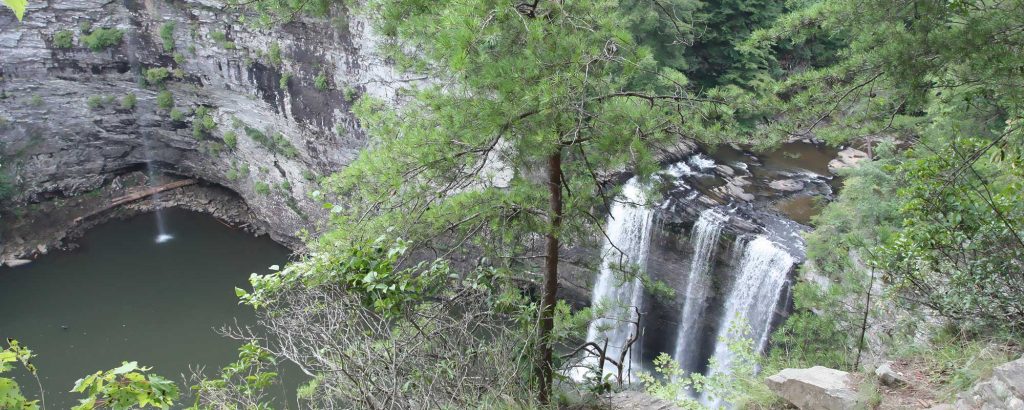
Cane Creek Falls is shorter than the park’s namesake, but its broad curtain and heavy flow can make it feel every bit as powerful. Nearby Rockhouse Falls makes a narrower 125-foot drop into the same gorge system. Seeing them together helps explain how Cane Creek and its tributaries carved this landscape. Explore the individual guides to Cane Creek Falls and Rockhouse Falls.
Cane Creek Cascades
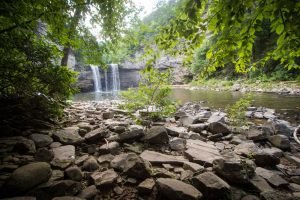
Cane Creek Cascades offers a gentler first encounter with the park’s waterfall country. The cascades are close to the nature center area and can be combined with nearby trails and viewpoints. This is a sensible starting point for families or visitors building a day around several short stops. Continue with our Cane Creek Cascades guide.
Piney Creek Falls
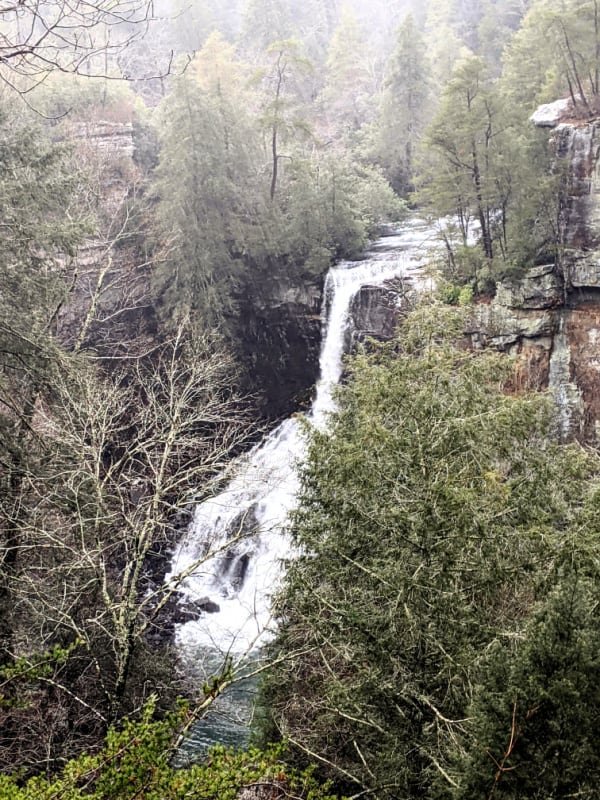
Piney Creek Falls lies away from the busiest central overlooks and rewards visitors with a quieter view into the gorge. The overlook is the practical destination for most people. Approaches deeper into this terrain can be rugged, so do not treat an unofficial path as a maintained trail. Our Piney Creek Falls guide provides more context.
When the Waterfalls Look Their Best
There is no single perfect month. The falls usually carry their strongest flow after periods of steady rain, often in the cooler part of the year and into spring. Summer brings long daylight and a full canopy, but dry spells can reduce the smaller falls to thin streams. Autumn color can be beautiful around the gorge, though waterfall volume depends entirely on recent weather. After heavy rain, expect slick rock, mud and more forceful water.
A Simple Waterfall Day
- Begin around the nature center with Cane Creek Cascades.
- Continue to the Cane Creek Falls and Rockhouse Falls viewpoints.
- Drive to the main Fall Creek Falls overlook for the park’s signature view.
- Add Piney Creek Falls if time, daylight and current conditions allow.
- Choose a gorge hike only if your group is equipped for steep, rocky terrain.
For a longer trip, pair this route with our guides to hiking at Fall Creek Falls, camping in the park, the Lodge at Fall Creek Falls and other park attractions.
Waterfall Safety
- Stay on marked trails, overlooks and designated routes.
- Keep well back from cliff edges and fast water; wet sandstone can be extremely slick.
- Do not climb around barriers or rely on social trails.
- Wear footwear suited to rock, roots and elevation change.
- Carry water and allow extra time for any descent into the gorge.
- Turn around when weather, daylight or trail conditions are working against you.
Before setting out, consult the official park map and the current Tennessee State Parks information for Fall Creek Falls. This site is an independent visitor guide; official notices and closures take precedence.

A Few Views from the Gorge