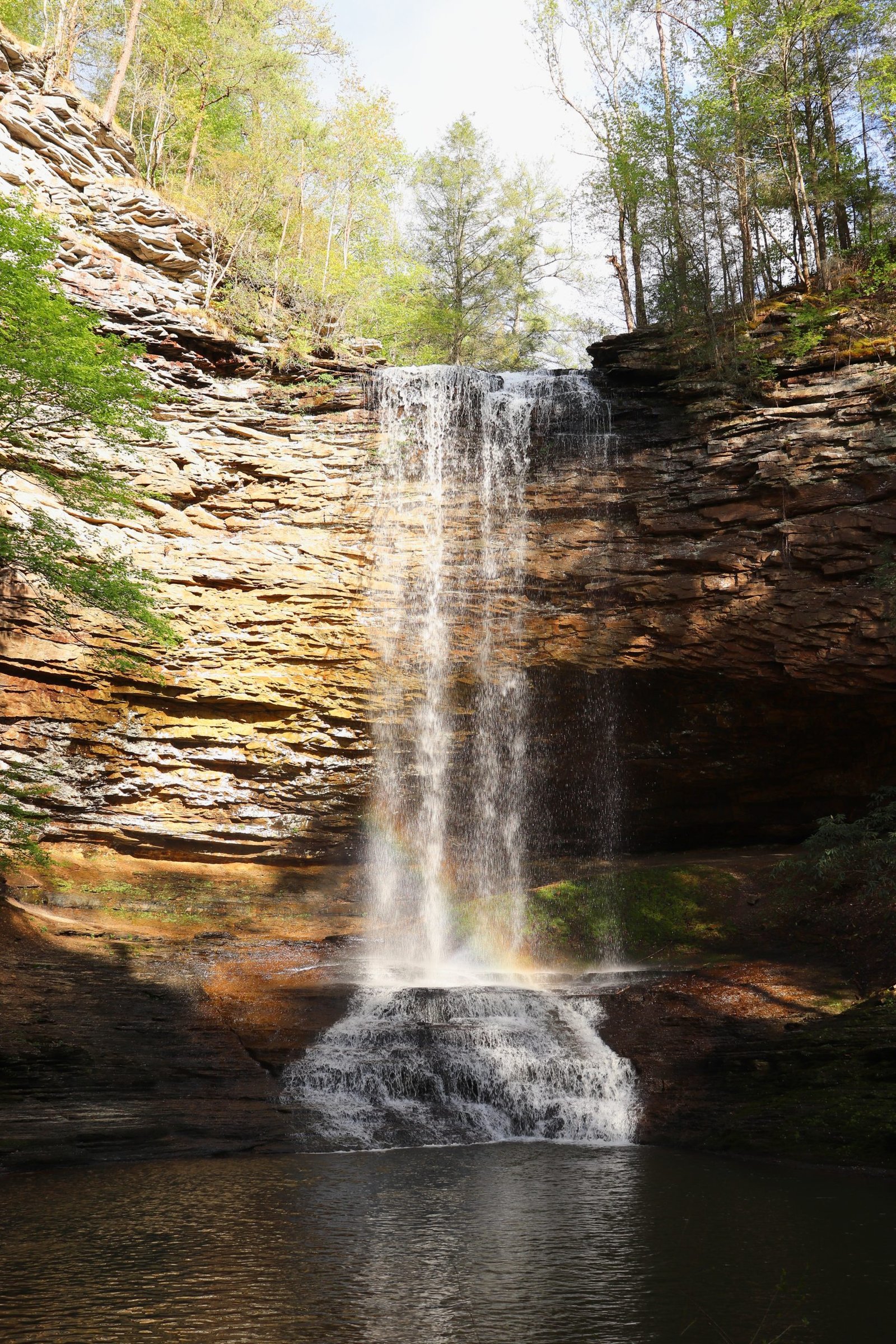
Know what you are coming to see
A More Remote Gorge Experience
Piney Creek Falls rewards visitors who value a quieter part of the park as much as an unobstructed waterfall portrait. Vegetation and topography can limit the rim view, while water flow changes with rainfall.
- Best fit
- Quiet, forested stop
- First approach
- Short approach; partial view
- Pair with
- Waterfalls hub
- Pets
- Leash required
Choose the maintained experience
Treat the Overlook as the Destination
The park’s current management information describes the top of Piney Falls as accessible but not the plunge pool. Do not attempt an unofficial gorge descent or follow old descriptions that promote a difficult route to the base.
Trail access can change after storms, erosion or maintenance. Follow current signs and ranger direction even when an older map or article describes another route.
Rain changes both beauty and risk
Water Flow and Conditions
Recent rainfall usually strengthens the waterfall, but it also increases spray, mud, slick rock and creek hazards. Dry weather can produce a lighter flow—especially at seasonal falls—without making unofficial approaches safer.
Check official park information →Stay on maintained routes and behind barriers.
Never promisePlunge-pool swimming
Obey signs, closures and ranger direction.
Photograph the place responsibly
Photography Notes
Use foliage as part of the composition rather than fighting the partial view. A longer lens can simplify the scene without moving beyond maintained areas.
Work from a stable maintained surface, keep pathways clear and never step beyond a barrier for an unobstructed angle.