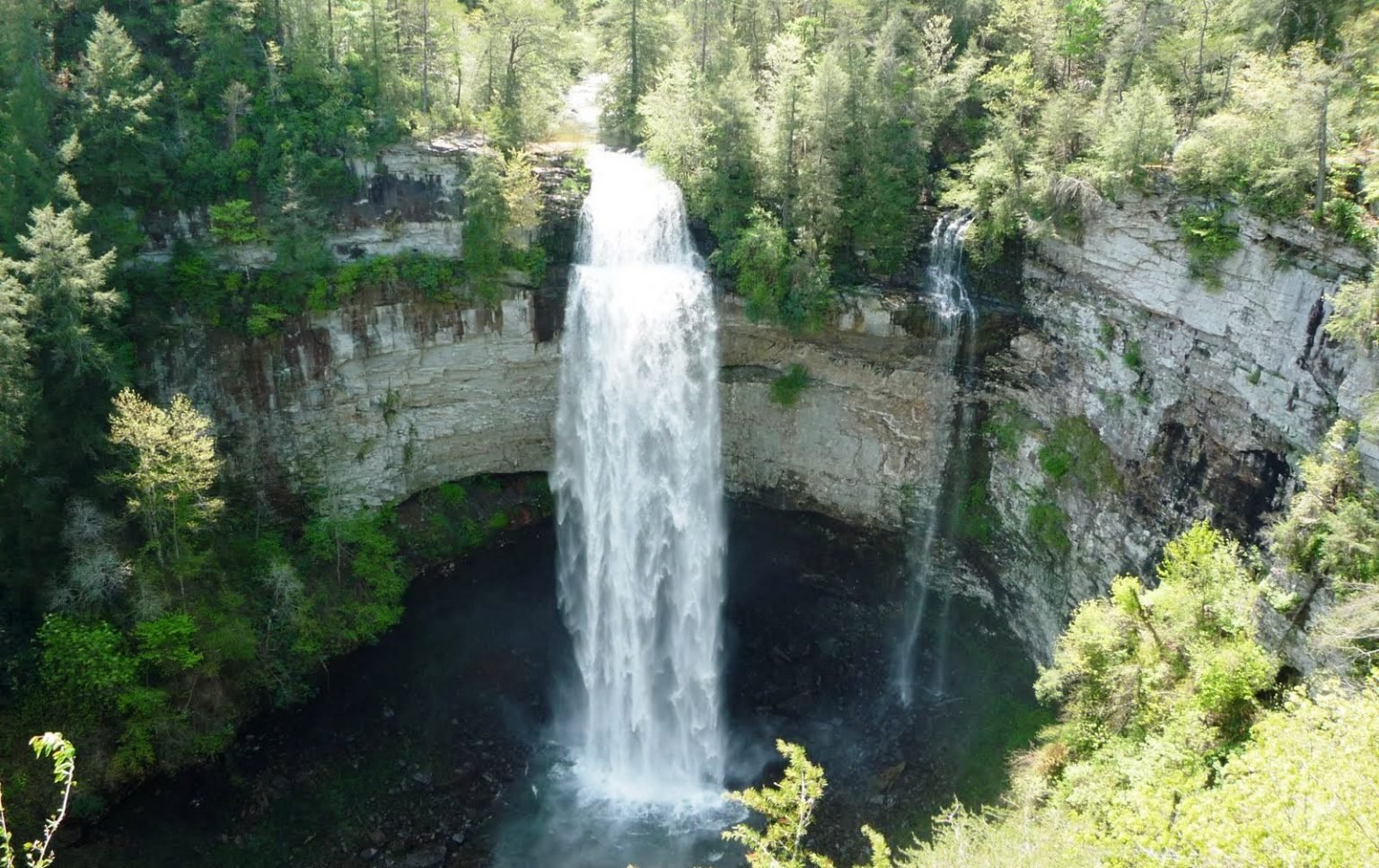
Choose the experience before you arrive
Fall Creek Falls at a Glance
The overlook and the gorge are not interchangeable experiences. The main overlook delivers the classic view quickly. Reaching the base requires a strenuous descent on a rugged trail—and the climb back out is the part visitors most often underestimate.
Main Overlook
The broad, familiar view across the gorge. Make this the first stop if time, mobility or weather rules out a difficult hike.
Plan the overlook ↓Base of the Falls
A dramatic perspective from below, reached over steep, uneven terrain. Allow energy for the return climb.
Assess the base trail ↓- Height
- 256 feet
- Setting
- Cumberland Plateau gorge
- Dogs
- Leashed pets permitted
- Gate
- Falls access closes at dusk
The essential first stop
The Main Overlook
The main overlook gives visitors the clearest full-length view of Fall Creek Falls and the wooded gorge below. It is the right choice for a first visit, a short stop or a day when trail conditions make a gorge descent unwise.
Water volume changes with recent rainfall. A lighter flow can reveal the height and shape of the drop; a wetter period creates a more powerful view. Both are authentic versions of the falls.
A serious second experience
Hiking to the Base
The route into the gorge trades a quick overlook for a close, immersive view. Expect steep grades, uneven footing and a demanding return climb. Wet leaves, roots and rock can make the trail substantially harder.
Turn around when weather, fading daylight or your group’s footing makes the descent questionable. The overlook is not a lesser visit; it is the safer choice for many travelers.
Read the complete base-trail guide →Steep descent + return climb
BringTraction & water
Wear shoes suited to wet, uneven trail
Let the conditions shape the visit
When to Go
Recent rain matters more than a promise tied to any single month. Wetter periods generally produce a stronger waterfall, while dry spells may reduce the flow. Heavy rain can also make gorge trails and rock surfaces hazardous.
Morning usually offers a calmer arrival and more flexibility. In autumn, color adds to the gorge view; in winter, bare trees can open sight lines. Summer brings heat, humidity and heavier visitation.
The gorge deserves respect
Safety Around the Falls
Cliff edges, wet rock and informal social paths can be fatal. Use maintained routes and overlooks.
This guide does not present the plunge pool as a swimming destination. Obey closures, signs and ranger direction.
Save energy, water and daylight for the uphill return from the gorge.
Leashes protect pets, wildlife and other trail users on narrow sections.
Work with the gorge, not against it
Photography Notes
The overlook is the best place for a wide composition that shows the height of the falls. The base offers scale and atmosphere, but spray, low light and uneven footing demand more care. A cloth for the lens and a secure camera strap are useful.
No photograph is worth stepping beyond a barrier or onto wet, exposed rock. Give other visitors room and avoid blocking narrow trail sections while setting up a shot.