Know what you are coming to see
Why Coon Creek Falls Is Different
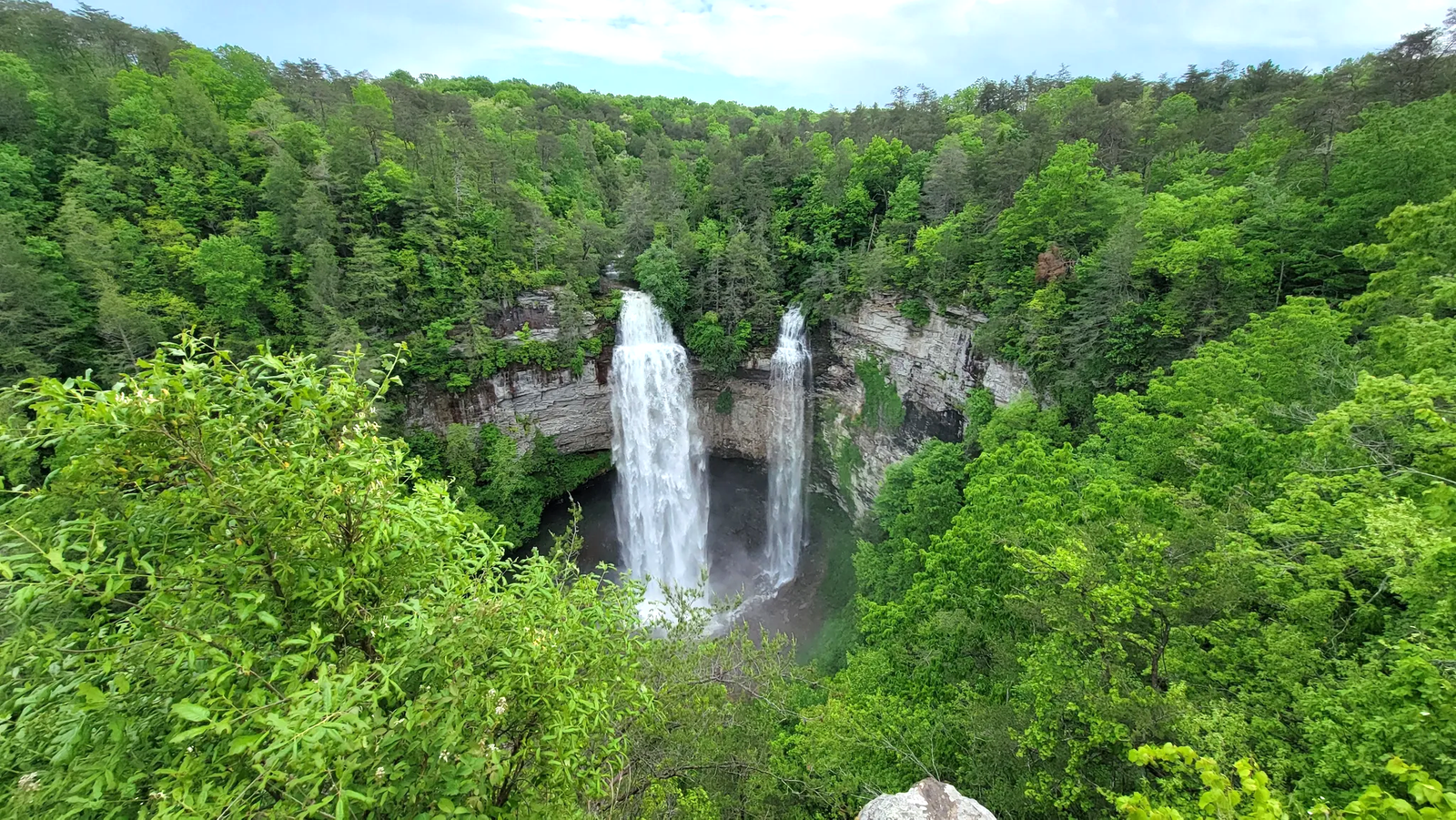
Coon Creek Falls is not a separate all-day destination. Its value is the way it changes the classic Fall Creek Falls scene after wet weather, adding another tall ribbon of water to the gorge. In a dry period, the flow may be slight or absent.
- Best fit
- Best after rain
- First approach
- Easy overlook visit
- Pair with
- Fall Creek Falls
- Pets
- Leash required
Choose the maintained experience
View It as Part of the Main Falls Stop
Begin with the established Fall Creek Falls overlook area and look across the gorge. Do not leave maintained overlooks or invent a route toward the drop. The satisfying visit is the combined landscape, particularly after sustained rainfall.
Trail access can change after storms, erosion or maintenance. Follow current signs and ranger direction even when an older map or article describes another route.
Rain changes both beauty and risk
Water Flow and Conditions
Recent rainfall usually strengthens the waterfall, but it also increases spray, mud, slick rock and creek hazards. Dry weather can produce a lighter flow—especially at seasonal falls—without making unofficial approaches safer.
Check official park information →Stay on maintained routes and behind barriers.
Never promisePlunge-pool swimming
Obey signs, closures and ranger direction.
Photograph the place responsibly
Photography Notes
Use a wider composition that includes both the gorge and neighboring Fall Creek Falls. A tighter lens can isolate the seasonal ribbon when it is flowing strongly.
Work from a stable maintained surface, keep pathways clear and never step beyond a barrier for an unobstructed angle.