Short distance, consequential terrain
Do Not Judge Cable Trail by Mileage
Tennessee State Parks’ 2025 inventory lists Cable Trail at 0.3 mile. That same assessment noted that the cable anchor needed to be reestablished and that plans were in place. Current park direction—not an older guide—must determine whether anyone attempts the route.
- Distance
- 0.3 mile
- Character
- Steep gorge route
- For
- Experienced hikers
- Essential
- Current confirmation
Make the decision before descending
Should You Attempt Cable Trail?
Consider this trail only if the park confirms it is open, the cable system is in service, conditions are dry enough for safe travel, and every person in the group is comfortable with steep, rocky terrain and an equally demanding return.
Do not attempt the route simply because it is short. Children, pets, anyone uneasy with exposure, and visitors without suitable footwear should use the established overlook network instead.
The best view does not require the highest risk
Start With the Overlooks
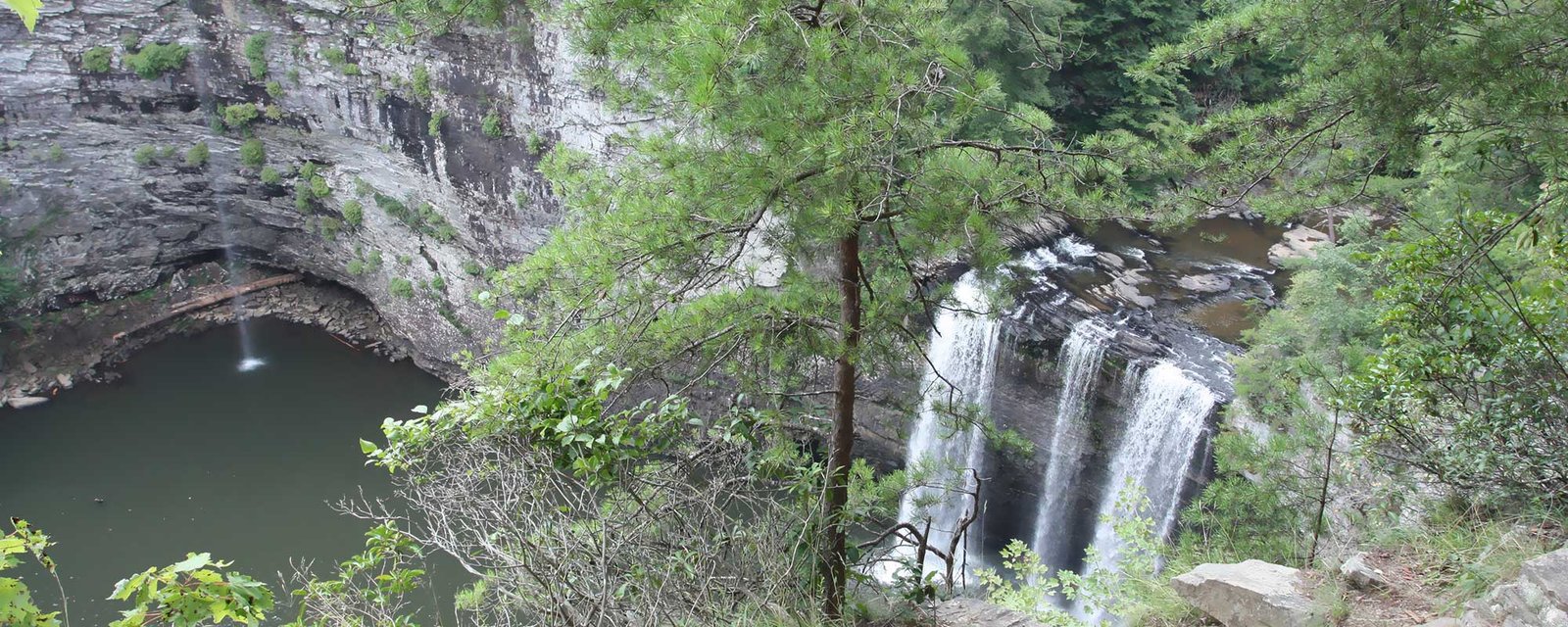
Most visitors should experience the Cane Creek gorge from the maintained overlook and suspension-bridge network. The Cane Creek Falls guide explains the destination, while the Gorge Overlook Trail provides a longer rim experience without presenting Cable Trail as the default.
Compare hiking trails →Signature gorge scenery for most visitors.
Specialized choiceCable Trail
Only with confirmed access and appropriate experience.
No confirmation means no descent
Cable Trail Safety
Never assume the cable or its anchors are ready for use. Check current park information and posted closures.
Rock, roots and leaves can become extremely slick after rain, frost or freezing weather.
Loose rock can travel downhill. Keep spacing and never dislodge stones onto another visitor.
Save strength, water and daylight for the return; descending is only half the route.
Prepare for terrain, not distance
What Experienced Hikers Should Carry
Wear sturdy footwear with strong traction. Carry water, a current park map and a compact first-aid kit, and keep both hands available for balance. Secure phones, cameras and loose equipment before any steep section.
Turn around immediately if the route differs from current park guidance, if a barrier is present, or if anyone loses confidence. Never improvise around a closure or damaged safety feature.