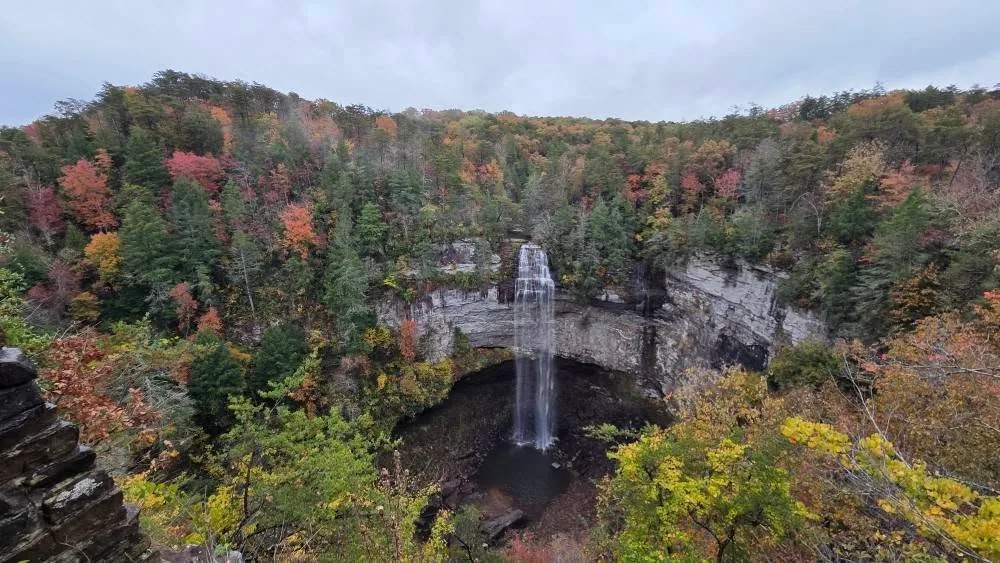
Fall Creek Falls does not give you the same photograph twice. The water, the light and the trees change the shape of the gorge from one visit to the next. If you are coming with a camera, plan around what the park is doing now—not what a calendar says it ought to be doing.
Spring: watch the water
After rain, the falls can become the whole story. Start at a safe overlook and photograph the waterfall in its setting before reaching for a tight frame. The rock walls and the depth of the gorge explain this place better than a close-up of white water alone. Rain also means slick ground, so keep well back from edges and do not assume a trail to the base will be a comfortable walk.
Summer: work with the shade
Full summer foliage puts deep greens around the waterfall, but the midday contrast can be harsh. Try the overlooks early or late, when the light is less severe. On a hot day, let the trees and trails tell part of the story rather than making every frame about the falls. Carry water and allow time to walk without rushing from one viewpoint to another.
Fall: let the color frame the gorge
Fall color is the obvious draw, but its timing changes with weather and elevation. A mix of green, gold and red often makes a stronger photograph than waiting for a mythical perfect peak. Include the rim, the rock and the forest around the falls. Move a few steps to clean up branches at the edge of your frame; do not cross a barrier to do it.
Winter: see farther
When leaves drop, the lines of the gorge come back into view. Even without snow, bare branches and softer winter light can make a fine photograph. Ice and snow are possibilities, not promises. Our winter visit guide covers the practical side of a cold-weather trip.
A simple plan for a photo day
Begin at the Fall Creek Falls overlook, then decide whether you want more waterfall views or a longer walk. Tennessee State Parks lists the 0.65-mile Overlook Trail as moderate and the 0.35-mile Base of Falls Trail as difficult and strenuous. A short trail on paper can still take time with a camera, and wet or icy footing changes the calculation. Check the official trail list for closures before choosing a route.
Keep a wide frame, a few details and one scene that shows the scale of the place. Leave the tripod at home if it makes you less willing to stop and look. More important than any equipment: stay behind barriers and away from cliff edges, and give yourself daylight. The road leading to the falls is locked at dark; day-use areas close at sunset.
Before you travel, check the park’s current notices and conditions and the local forecast. A good photograph begins with the day you actually have.
Park information checked October 6, 2026 against Tennessee State Parks. Trail status and access can change.